
X-Rays
Radio Blackout
Electrons
Solar Radiation
Kp Index
Kiruna
▲ Maximum values during the last hour (Kp 3 hours) ♫
▲ Realtime Solar Wind at L1 (with 60 min trend)
Space Weather Alerts (NOAA/SWPC Last 12 Hours)
- Loading alerts…


▲ NASA/SDO/GOES/Mitaka Solar Disc (image rotator)

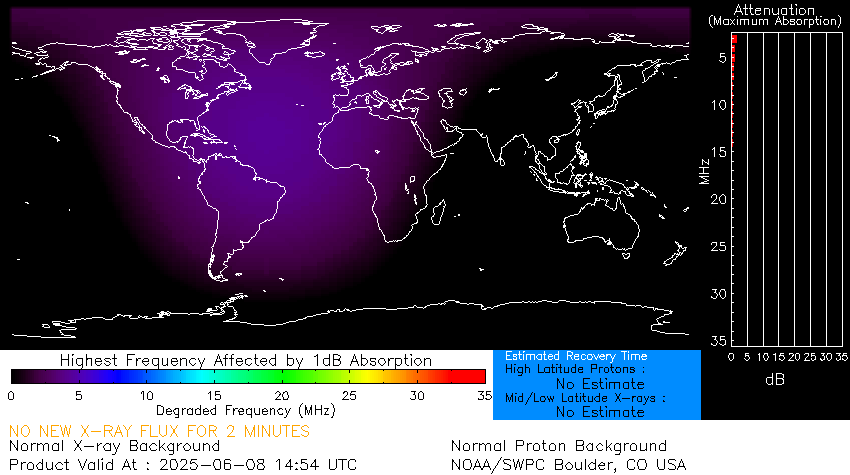
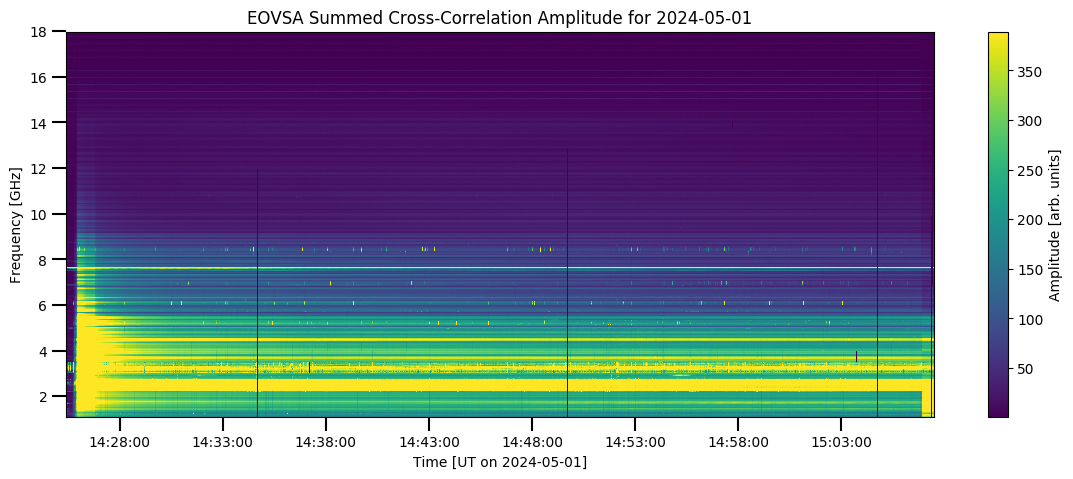

▲ The DRAP D-Region Absorption Product addresses the operational impact of the solar X-ray flux and SEP events on HF radio communication. Long-range communications using high frequency (HF) radio waves (3 – 30 MHz) depend on reflection of the signals in the ionosphere. Radio waves are typically reflected near the peak of the F2 layer (~300 km altitude), but along the path to the F2 peak and back the radio wave signal suffers attenuation due to absorption by the intervening ionosphere. The model is used as guidance to understand the HF radio degradation and blackouts this can cause. The SWPC page includes an animated version of the map.
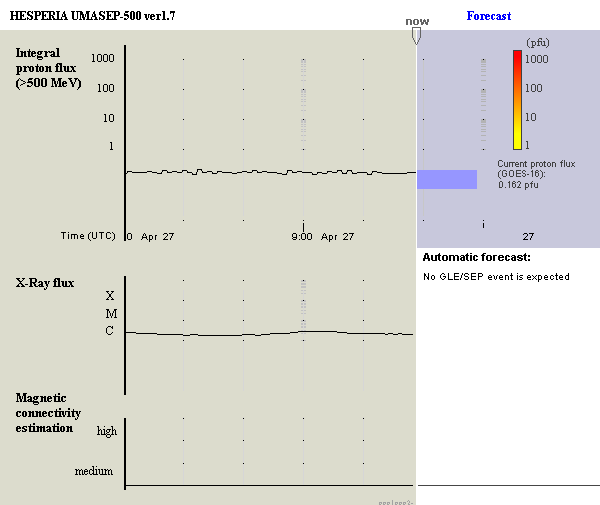
▲ Provided by: Institute for Astronomy, Astrophysics, Space Applications & Remote Sensing
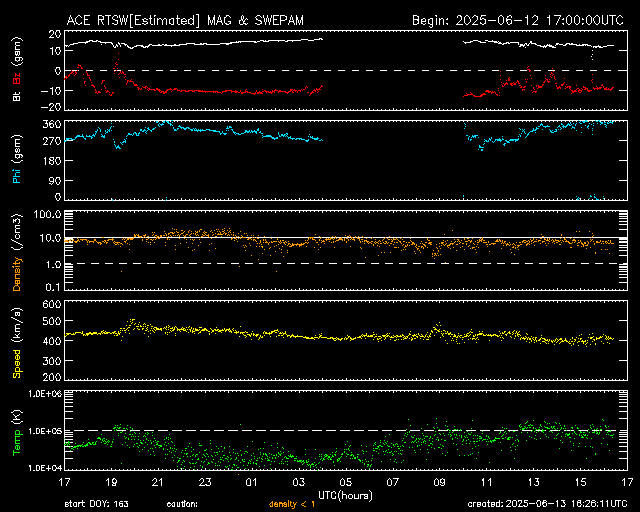
▲ NASA/ACE Satellite at L1 (early warning)
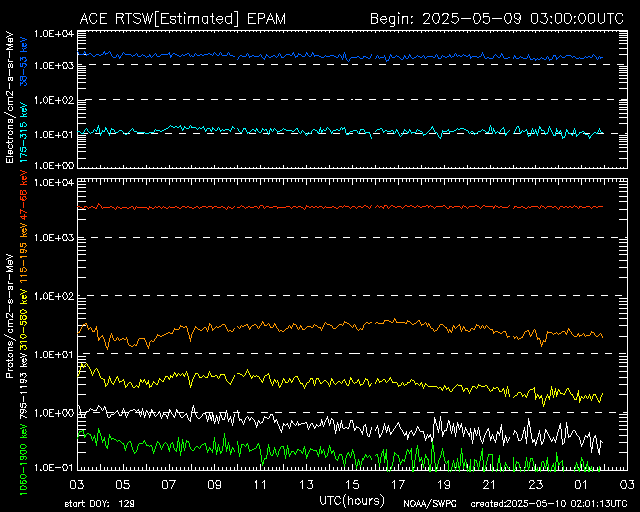
▲ NASA/ACE Satellite at L1 (early warning)
More ACE Data here
DISCOVR Real-time Solar Wind Data is here
What is particles/cm²/s/sr?
It means:
The number of electrons or protons crossing 1 cm² of detector area, per second, per steradian of viewing angle. This makes the quantity independent of the detector’s size and orientation, so different instruments can be compared. The detectors are on the ACE and Discovr satellites located at the Earth-Sun Lagrange Point L1.
Page updated once per 3 minutes